
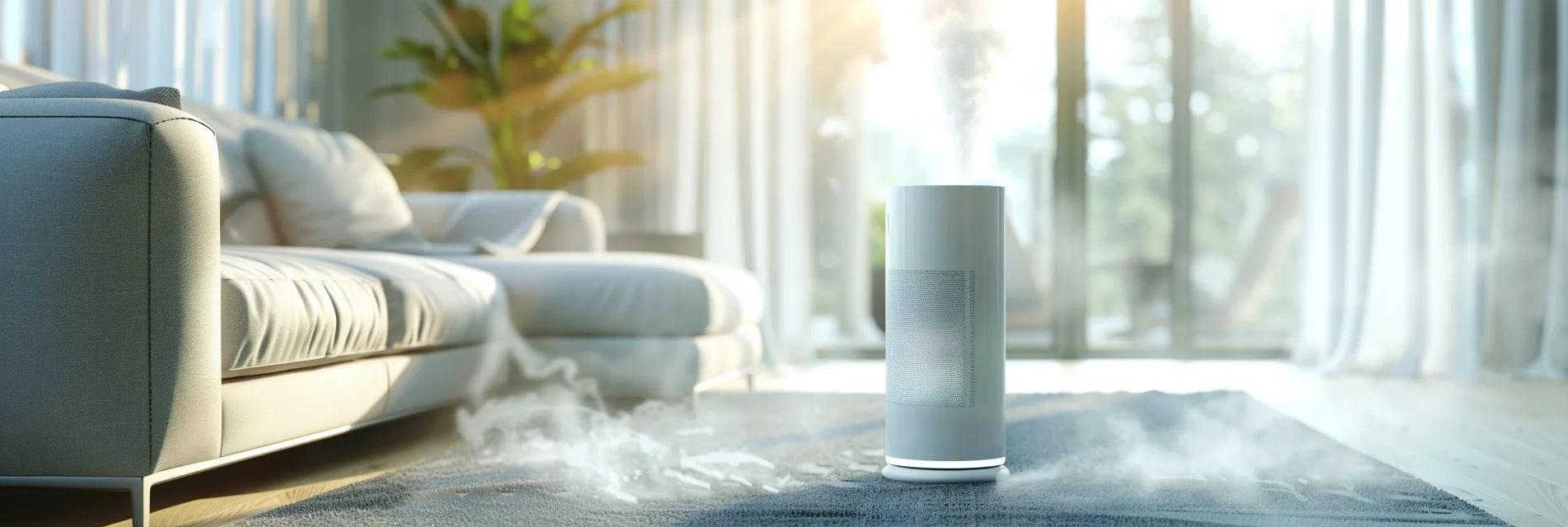
When it comes to eliminating smoke from your home, whether it's cigarette smoke, wildfire smoke, or the odor from vaping, an air purifier is an essential tool. These devices work by filtering out harmful particles, odors, and gases from the air, improving the overall air quality. Finding the best air purifier for smoke depends on factors such as filter type, size, and features. This guide helps you navigate the best options available to provide clean air in your space.
Best
Turonic Premium Air Purifier PH950
Best Overall Air Purifier for Smoke Removal
Premium Smoke Elimination
The Turonic Premium Air Purifier PH950 is a premium large-room air purifier designed to handle heavy smoke, allergens, dust and odors with a robust multi-stage filtration system. It typically combines a True HEPA filter with an advanced activated carbon layer, UV sterilization and ionization to trap ultrafine smoke particles and neutralize volatile organic compounds (VOCs).
Smart Operation for Smoke-Heavy Environments
This model supports large spaces and includes smart sensors that monitor air quality in real time and automatically adjust the fan speed to maintain clean air. With multiple fan levels, quiet night mode and intuitive controls, the PH950 balances performance with everyday convenience for long-term use in homes or offices.

What Makes an Air Purifier Effective for Smoke Removal?
An effective air purifier for smoke removal primarily depends on the type of filter it uses and its capacity to deal with both particles and gases. Smoke contains fine particles and volatile organic compounds (VOCs) that require specialized filtration systems to eliminate. High-efficiency particulate air (HEPA) filters are excellent for trapping particles, but to tackle smoke odors and gases, activated carbon filters are crucial. Combining both technologies provides optimal performance for smoke removal.
Additionally, the air purifier's CADR (Clean Air Delivery Rate) plays a significant role in its effectiveness. A higher CADR means the purifier can clear smoke and other pollutants faster. The power and coverage area should be suited to the room size for efficient air purification, ensuring that all the air in the room is properly filtered without delay. This combination of features ensures an air purifier's efficiency at removing smoke and improving indoor air quality.
How Air Purifiers Help with Cigarette, Wildfire, and Vape Smoke
Air purifiers help remove harmful particles and odors from cigarette, wildfire, and vape smoke by using advanced filtration systems. Cigarette smoke contains toxic chemicals and fine particles that linger in the air, while wildfire smoke brings in larger particulate matter that can irritate the respiratory system. Vape smoke, on the other hand, contains smaller particles and chemicals like nicotine and propylene glycol, which can cause discomfort when inhaled. Air purifiers with HEPA filters capture these particles, and activated carbon filters neutralize the strong odors from all types of smoke.
HEPA vs. Carbon Filters: What's Best for Smoke?
HEPA filters are designed to trap particles as small as 0.3 microns, which is ideal for removing allergens, dust, and smoke particles. These filters are especially effective in reducing fine particulate matter found in cigarette smoke and wildfire smoke. However, while HEPA filters are great for particle removal, they don't eliminate odors and gases that often accompany smoke. That's where activated carbon filters come in.
Activated carbon filters use a process called adsorption, which attracts and traps gases, including the chemicals and odors found in smoke. For a purifier to be effective against all aspects of smoke, both particulate and odor, it's best to choose a unit that incorporates both HEPA and activated carbon filters. This combination ensures that the air purifier can handle smoke from any source and provide comprehensive air purification.
Choosing the Right Power Level and Coverage Area for Smoke Removal
When selecting an air purifier for smoke removal, it's essential to choose a model with the right power level to match your room's size. The CADR rating gives you an idea of how quickly an air purifier can clean the air, and it's essential to match this with your room size. For smaller rooms, a compact unit with a lower CADR may suffice, but for larger rooms or spaces affected by wildfire smoke, a more powerful unit is needed to effectively clear the air.
Key Features to Look for in Air Purifiers for Smoke
When selecting an air purifier for smoke, key features include HEPA and activated carbon filters, CADR ratings, noise level, and additional smart functions like air quality sensors. Look for a purifier that suits your space in terms of size and airflow capabilities. Many modern air purifiers come with extra features, such as app control, auto mode, and air quality sensors, which allow the unit to adjust its settings based on the pollution level. Here's a quick comparison table:
|
Feature |
Importance for Smoke Removal |
|
HEPA Filter |
Essential for removing smoke particles |
|
Activated Carbon Filter |
Important for eliminating smoke odors |
|
CADR Rating |
Indicates the purifier's efficiency in clearing smoke |
|
Noise Level |
Important for quiet operation, especially in bedrooms |
|
Smart Features |
Useful for automatic adjustments and remote control |
High-Performance Filtration Systems for Different Types of Smoke
Air purifiers with high-performance filtration systems can effectively deal with the complexities of different types of smoke. Cigarette smoke, for example, involves small particles and tar, while wildfire smoke contains larger particulate matter and harmful chemicals. Air purifiers designed to tackle these types of smoke will include advanced filters such as HEPA for particulates and activated carbon to neutralize toxic gases.
For vape smoke, which contains smaller particles, a high-efficiency HEPA filter is crucial to trap the minuscule particles in the air. For areas affected by multiple sources of smoke, consider a purifier with multi-stage filtration that can handle different pollutants. Choosing an air purifier with these advanced systems will ensure that your indoor air quality is effectively improved regardless of the smoke source.
Coverage Area: Choosing the Right Size for Your Space
Air purifiers come in various sizes, and it's important to select one that is capable of purifying the air in your specific space. Pay attention to the recommended square footage that the purifier is rated for. Choosing a purifier that can cover the entire area of your room will ensure that smoke particles are filtered out efficiently. In larger rooms or open spaces, you may need a more powerful unit to achieve the same level of air purification as in smaller rooms.
Air Quality Sensors and Smart Features (Auto Mode, App Control)
Many modern air purifiers come equipped with air quality sensors that detect the level of pollution in the room and automatically adjust the purifier's settings. These smart features, such as auto mode and app control, provide a hands-off experience, allowing the air purifier to regulate its operation based on real-time data. App control also allows for remote monitoring, which is useful if you're not at home but want the air purifier to operate efficiently when you return.
Noise Level: Quiet Operation Considerations
The noise level of an air purifier can be an important consideration, especially if the unit will be used in a bedroom or living room. Some air purifiers are designed to operate quietly even on higher power settings, which can be important for maintaining a peaceful environment. Look for models with a noise level measured in decibels (dB) and consider those that offer multiple fan speed options so you can adjust the sound level based on your comfort.
It's worth noting that air purifiers with more powerful motors may produce more noise, especially when running at higher settings. However, many manufacturers now offer models specifically designed to reduce noise while still maintaining strong filtration performance. Silent operation is especially critical for those who plan to run the air purifier continuously, such as in areas with constant smoke exposure from wildfire season or regular vaping.
Energy Efficiency and Running Costs
When choosing an air purifier, energy efficiency is an important factor to consider, especially if you plan to run it for extended periods. Some air purifiers are designed to consume less energy while maintaining optimal performance, which helps reduce your electricity costs. Models with energy-saving modes and automatic shutoff timers can help you control energy consumption and ensure the unit isn't running unnecessarily when the air quality is already good.
Additionally, consider the overall running costs, including the cost of replacing filters. While an initial investment in a high-quality air purifier may seem costly, choosing one that is energy-efficient and has affordable filter replacement costs can save money in the long run. Check the manufacturer's recommended filter replacement intervals and the cost of replacement filters to get an accurate picture of the total running costs over time.
Filter Replacement and Maintenance Costs
Maintaining an air purifier involves regular filter replacements. HEPA and activated carbon filters typically need to be replaced every 6-12 months, depending on the model and usage. The cost of replacement filters can vary, so it's important to consider this expense when purchasing an air purifier. Many air purifiers offer filter change indicators to alert you when it's time for a replacement, ensuring that the unit continues to perform effectively over time.
Portability: Moving Between Rooms or Locations
If you plan to move the air purifier between rooms or even take it with you when traveling, portability is an important feature to consider. Look for air purifiers with a lightweight design and a comfortable handle, making them easy to carry. Some compact units are specifically designed for portability, offering the same level of filtration while being easy to transport from one room to another or even on the go.
Top Air Purifiers for Smoke by Budget and Performance
1. Turonic Premium Air Purifier PH950

The Turonic Premium Air Purifier PH950 is a premium large-room air purifier designed to handle heavy smoke, allergens, dust and odors with a robust multi-stage filtration system. It typically combines a True HEPA filter with an advanced activated carbon layer, UV sterilization and ionization to trap ultrafine smoke particles and neutralize volatile organic compounds (VOCs), effectively tackling cigarette, wildfire and vaping smoke. This model supports large spaces and includes smart sensors that monitor air quality in real time and automatically adjust the fan speed to maintain clean air. With multiple fan levels, quiet night mode and intuitive controls, the PH950 balances performance with everyday convenience for long-term use in homes or offices.
+ Pros:
- Excellent for large rooms with strong smoke removal capacity
- Comprehensive multi-stage filtration including True HEPA and activated carbon
- Smart air-quality sensors and automatic adjustment modes
- Quiet operation ideal for bedrooms or living areas
- Multiple fan speeds and intuitive control interface
- Cons:
- Bigger and more expensive than basic models
- Larger footprint may not fit very small spaces
2. Levoit Core 600S

The Levoit Core 600S is a smart high-capacity air purifier that uses a professional 3-stage True HEPA H13 filtration system to capture up to 99.97% of airborne particles, including fine smoke particles down to 0.3 microns. It offers powerful airflow with a high CADR suitable for rooms up to approximately 147 m², ensuring rapid purification even in large open spaces. Equipped with smart sensors and automatic mode, it detects real-time air quality and adjusts performance accordingly. The unit supports app and voice control, has multiple operation modes including sleep, timer and ECO energy-saving function, and provides filter life indicators for easier maintenance.
+ Pros:
- Very high purification capacity with True HEPA H13 filtration
- Covers large living areas efficiently
- Smart app and voice control options
- Automatic air-quality sensing and fan adjustment
- Energy-efficient with ECO and sleep modes
- Cons:
- Relatively larger and pricier than compact purifiers
- More complex features may be unnecessary for very small spaces
3. GreenTech pureAir 500

The GreenTech pureAir 500 is a compact and affordable tabletop air purifier suited for smaller spaces such as bedrooms, home offices or apartments. It uses a combination of HEPA-type and activated carbon filtration to capture airborne particles like smoke, pollen, pet dander and odors. With built-in ionization, the unit helps cluster fine particles for easier capture. Its lightweight and portable design makes it easy to relocate between rooms, and it operates quietly with low power consumption, making it a practical choice for everyday air purification in moderate-sized rooms.
+ Pros:
- Affordable and portable option with dual filtration
- Effective at reducing smoke, odors and common allergens
- Lightweight, compact design ideal for bedrooms or offices
- Low energy consumption and easy setup
- Includes ionization to assist particle capture
- Cons:
- Less powerful than large room purifiers
- Performance limited in heavy smoke conditions compared to high-end models
4. Shark HP232 Clean Sense Air Purifier MAX

The Shark HP232 Clean Sense Air Purifier MAX is designed for large rooms up to ~1200 sq. ft. Its True HEPA filtration captures up to 99.98% of airborne particles, including smoke and allergens, while Odor Neutralizer Technology helps absorb and counteract lingering smells. The Clean Sense IQ system continuously monitors air quality and automatically adjusts fan speeds for optimal performance. With multiple fan settings and an easy-to-read LED display, the unit is straightforward to operate and provides robust smoke and odor removal for living rooms, basements or open floor plans.
+ Pros:
- Very high particle capture efficiency (99.98%)
- Odor Neutralizer Technology for improved smell reduction
- Automatic Clean Sense IQ monitoring and adjustment
- Covers large room spaces effectively
- Quiet operation with adjustable settings
- Cons:
- Larger and heavier than compact models
- Fewer smart connectivity features than some competitors
5. LEVOIT Smart WiFi Air Purifier H13 True HEPA

The LEVOIT Smart WiFi Air Purifier H13 True HEPA is a budget-friendly smart purifier offering strong core performance. It uses a True HEPA filter that captures up to 99.97% of fine particles, including smoke, dust and pet dander, making it suitable for bedrooms, dorms and small living areas. Built-in Wi-Fi and app control allow you to monitor air quality and adjust settings remotely. Despite its compact size, it offers reliable purification, quiet operation and intuitive control options, making it a great entry-level choice for everyday smoke removal.
+ Pros:
- Strong smoke and particle removal with True HEPA filtration
- Smart Wi-Fi app control and remote management
- Excellent value for small spaces and budgets
- Quiet and user-friendly operation
- Cons:
- Smaller coverage area compared to larger purifiers
- Limited advanced sensing features compared to premium models
How to Choose the Best Air Purifier for Smoke

Choosing the right air purifier for smoke involves understanding your specific needs, the type of smoke you are trying to eliminate, the size of the space to be purified, and your budget. Factors like filter types, air purification power, and additional features like smart controls and quiet operation also play a significant role in the decision-making process. By focusing on these essential elements, you can select the best air purifier to effectively combat smoke from cigarettes, wildfires, or vaping in your home or office.
Define Your Needs: Type of Smoke, Room Size, and Budget
First, assess the type of smoke you are dealing with, whether it's from cigarettes, wildfires, or vaping, because each type may require a slightly different approach to filtration. For example, wildfire smoke can carry larger particulates, while cigarette smoke may involve both small particulates and strong odors. The room size is also crucial as it will determine the power and CADR (Clean Air Delivery Rate) needed for effective air purification. Budget is another consideration: more advanced models with additional features may come with a higher price tag, so consider what level of performance you need within your budget.
Once you've defined these factors, you can narrow down your choices and select an air purifier that aligns with your requirements. Ensure that the chosen model has adequate coverage for the size of your room, and check the filter types to match the smoke types you want to remove. Balancing features with price will help you make the most cost-effective decision.
Key Features to Prioritize for Smoke Types (Cigarette, Wildfire, Vape)
When selecting an air purifier for smoke removal, here are key features to prioritize based on the type of smoke you are dealing with:
- HEPA Filters – Essential for trapping smoke particles from cigarettes, wildfire, and vape.
- Activated Carbon Filters – Important for neutralizing odors and gases, especially from cigarette and wildfire smoke.
- Ionizers – Help capture smaller particles that might be missed by HEPA filters.
- Smart Sensors – Automatically adjust fan speeds based on the air quality, especially useful in environments with varying smoke levels.
- Quiet Operation – Important if you plan to run the purifier continuously in a living or bedroom space.
Choosing Between HEPA and Activated Carbon Filters
HEPA filters are a standard choice for air purifiers, particularly for their ability to capture particles as small as 0.3 microns, which makes them effective against smoke particles. However, while HEPA filters excel at particle removal, they don't address odors and gases. That's where activated carbon filters come into play. Activated carbon filters are designed to adsorb gases, odors, and chemicals that are commonly found in smoke, making them vital for dealing with cigarette and wildfire smoke.
For optimal performance, many air purifiers combine both HEPA and activated carbon filters, ensuring they effectively remove both smoke particles and odors. Choosing a model that integrates both will give you the best chance of purifying the air from all types of smoke.
Evaluating Energy Efficiency and Ongoing Maintenance
Energy efficiency is an important consideration, especially if you plan to run the air purifier for extended periods. Models with energy-saving modes or automatic shutoff features can help reduce electricity costs. Pay attention to the Energy Star certification, which indicates the purifier meets certain energy efficiency standards.
Ongoing maintenance costs, such as filter replacements, are another essential factor. HEPA and activated carbon filters generally need to be replaced every 6–12 months, depending on the usage and air quality. Be sure to factor in the cost of replacement filters and how frequently they need to be changed when choosing your purifier.
Balancing Initial Cost with Long-Term Usage
While it's tempting to choose a more affordable air purifier, consider the long-term costs. Models with advanced features or higher CADR ratings may have a higher upfront cost, but they can provide better air quality and efficiency over time. Additionally, purifiers with more durable components or longer-lasting filters can save you money in the long run by reducing replacement frequency and operating costs.
Specifications Comparison of Budget, Mid-Range, and Premium Air Purifiers
When comparing air purifiers, consider the following specifications to help you determine the best choice for your needs:
|
Feature |
Budget |
Mid-Range |
Premium |
|
CADR (Clean Air Delivery Rate) |
Low to Medium |
Medium to High |
High |
|
Room Size Coverage |
Small (up to 250 sq ft) |
Medium (250–400 sq ft) |
Large (400+ sq ft) |
|
Filter Types |
HEPA Only |
HEPA + Activated Carbon |
HEPA + Activated Carbon + UV/Ionizer |
|
Energy Efficiency |
Basic |
Good |
Excellent |
|
Smart Features |
None |
App Control |
App Control + Auto Mode |
Do You Need More Than One Air Purifier or a Second Air Quality Tool?

When One Air Purifier Is Enough for Your Entire Home
If you have a small or medium-sized home, one well-placed air purifier may be sufficient to handle the smoke. A single powerful model with a high CADR rating can effectively clean the air in a living room, bedroom, or even an open-plan space. Ensure that the purifier is suitable for the size of your room and has a strong enough filtration system to handle the type of smoke you are dealing with.
However, if your home has multiple rooms that get affected by smoke, or if you want to purify air in multiple areas at once, you may want to consider adding a second unit. In most cases, a single unit placed centrally in a room will do the job, but extra purifiers may be needed for larger spaces or heavily polluted areas.
Cost-Effective Add-Ons: Extra Filters, Carry Cases, and Chargers
When buying an air purifier, it's important to consider the cost of additional items such as replacement filters, carrying cases, and chargers (for portable models). Some air purifiers also offer optional accessories that can enhance the user experience, like aroma diffusers or extra-large filter packs. Buying extra filters in bulk can also save money in the long term, as most filters need to be replaced every 6–12 months.
Who Benefits Most from a Second Unit (Multiple Rooms, Families, Travel)
A second air purifier may be beneficial if you have a larger home with multiple rooms that need smoke protection, or if you live in a shared space with family members who have different needs. Families with young children or elderly individuals who are more sensitive to smoke particles can also benefit from an extra unit in different areas of the home. Additionally, travelers may find portable air purifiers particularly useful for maintaining air quality on the go.
Air purifiers for families can also help reduce household odors, dust, and allergens in addition to smoke. The ability to move the purifier from room to room or take it with you while traveling makes it a convenient option for anyone who wants to ensure clean air wherever they go.
Setup and Daily Usage Tips to Maximize Smoke Removal Efficiency
To get the most out of your air purifier, make sure to place it in the optimal location. Avoid positioning it too close to walls or corners, as this can restrict airflow and reduce efficiency. Ideally, the purifier should be placed in an area with good airflow, such as near an open window or in the center of a room.
Before You Start: Place the Air Purifier in the Right Spot
Ensure your air purifier is placed in a location where it can filter as much air as possible. Avoid placing it near obstacles such as curtains or furniture that can block airflow. Position the unit in a room's central area, where air circulates freely, to maximize its effectiveness.
Best Technique: Regular Operation for Consistent Air Quality
To maintain clean air in your home, run your air purifier regularly. Continuous operation ensures the air stays free of pollutants and keeps smoke particles from accumulating. Most modern air purifiers are designed for 24/7 use, so don't hesitate to leave them running throughout the day and night. Adjust the fan speed as necessary based on your air quality readings, and use sleep mode at night if you want quieter operation.
It's also a good practice to keep windows closed when the air purifier is running, especially if you're in an area affected by outdoor smoke. This helps prevent polluted air from re-entering the room and gives the purifier a better chance to keep the air clean.
Cleaning and Hygiene: Wiping Filters and Care for Air Vents
Regularly clean the exterior of your air purifier to remove dust and debris. Check the filters every month to ensure they are not clogged. Wipe them gently to remove any dust or particles that may have settled on the surface. Clean the air vents to maintain optimal airflow, and inspect the filter's condition to see if it needs replacement.
Maintenance: Filter Replacement, Battery Care (for portable units), and Storing the Unit
Make sure to replace filters regularly according to the manufacturer's recommendations, as clogged filters can reduce performance. For portable units, check the battery status and recharge it regularly to ensure maximum efficiency. If you plan to store the purifier, keep it in a dry, cool area to prevent dust from accumulating inside the unit during the off-season.
Special Considerations for Different Users and Situations

Small Apartments and Quiet-Use Priorities
In smaller apartments, noise level and space efficiency are crucial. Choose a model that operates quietly, especially if it will be used in a bedroom or shared living area. Compact purifiers that provide adequate performance while being discreet and space-saving are ideal for these settings. Look for features like sleep mode and low noise operation for a peaceful environment.
Additionally, ensure that the air purifier can effectively clean the air in the small space without being too bulky. The right choice will improve air quality without taking up too much room, ensuring you get maximum value from your purifier in limited spaces.
Heavy Smokers and Wildfire Areas Needing Higher Coverage
In homes with heavy smokers or in areas prone to wildfires, it's essential to have a powerful air purifier with high CADR ratings and large room coverage. A purifier with robust filtration, such as HEPA and activated carbon, will help remove both smoke particles and odors. Look for units that are specifically designed to handle high concentrations of smoke for optimal performance during wildfire season.
Cigarette Smoke vs. Wildfire Smoke: Matching Power and Filtration Needs
|
Feature |
Cigarette Smoke |
Wildfire Smoke |
|
Filter Type |
HEPA + Activated Carbon |
HEPA + High CADR |
|
Coverage Area |
Medium (200-300 sq ft) |
Large (400+ sq ft) |
|
Odor Control |
Essential |
Optional |
Sensitive Users, Smokers, and Families with Children
For sensitive users, such as children or individuals with respiratory conditions, selecting an air purifier that operates quietly and effectively is crucial. Choose a model that offers extra layers of filtration and a lower noise level. It's important to look for purifiers with advanced filters that can handle both smoke and general allergens in the air. Regular maintenance and filter replacements will ensure continuous protection against air pollution, particularly in homes with children or individuals prone to allergies.
When Air Purifiers Aren't Enough (Smoke Intensity, Structural Issues)
In some cases, air purifiers alone may not be sufficient to fully resolve air quality issues, especially if smoke is highly concentrated or structural issues such as poor ventilation contribute to the problem. In these cases, it's important to address both the external sources of smoke and improve the overall airflow in your home. Consider adding exhaust fans, sealing windows, or improving insulation to help prevent the intrusion of smoke into your living space.
Conclusion
Choosing the right air purifier for smoke is essential for maintaining a healthy living environment, especially in homes affected by cigarette smoke, wildfire smoke, or vape. By understanding your specific needs, considering key features, and evaluating ongoing costs, you can find an air purifier that provides effective and efficient smoke removal.
Remember to maintain the air purifier regularly, replace filters as recommended, and make sure to place the unit in an optimal location for maximum airflow. With the right air purifier, you can significantly improve indoor air quality and enjoy a smoke-free environment at home or work.
FAQ
What type of air purifier is best for cigarette smoke?
HEPA and activated carbon filters are best for removing both the particulate matter and the odors from cigarette smoke. Choose a model with both for optimal performance.
Can an air purifier help with wildfire smoke?
Yes, an air purifier with high CADR ratings and HEPA filters will help remove particulate matter from wildfire smoke. Choose a model with a high CADR for large room coverage.
How often should I replace the filters in my air purifier?
Filters should be replaced every 6–12 months, depending on the model and usage. Always follow the manufacturer's guidelines for filter replacement.
Can I use an air purifier in a room with heavy smoke?
Yes, but ensure the air purifier has a high CADR rating and is suitable for large room sizes to handle the higher concentration of smoke.
Do air purifiers help with allergies?
Yes, air purifiers with HEPA filters are effective at removing allergens such as pollen, dust, pet dander, and mold spores, improving indoor air quality for allergy sufferers.


