

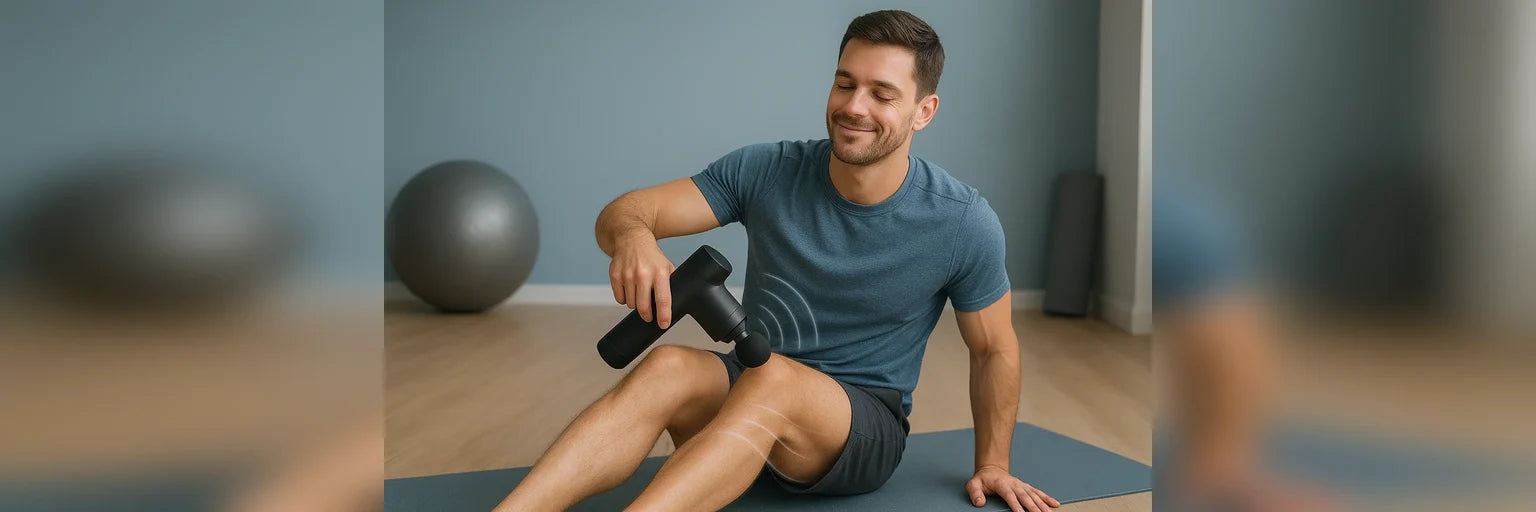
Massage guns have rapidly grown in popularity as a powerful tool for easing muscle tension and boosting mobility. By delivering deep, targeted percussive therapy, they can enhance flexibility, speed up post-workout recovery, and help release stubborn tightness from everyday activities. When used as part of a structured routine, a massage gun supports healthier muscles, better range of motion, and improved overall performance. In this guide, we’ll show how a smart, consistent routine can turn your device into a key ally in both training and recovery.

Why People Use Massage Guns
Massage guns have become a go-to tool for athletes, fitness enthusiasts, and anyone dealing with muscle tension because they offer quick, targeted relief and support overall muscle health. By delivering rapid percussive pulses, they help loosen tight areas, promote recovery, and enhance flexibility in ways that traditional stretching alone may not achieve.
Muscle Recovery and Relaxation: Massage guns help reduce soreness and release built-up tension by targeting deep muscle layers, making recovery faster and more comfortable.
Improved Blood Circulation: The percussive action boosts blood flow, which helps reduce stiffness, supports nutrient delivery, and accelerates tissue repair.
Flexibility and Range of Motion: Regular use helps break down adhesions and knots, improving mobility and allowing muscles to move more freely and efficiently.

What Does a Proper Massage Gun Routine Look Like?
Incorporating a massage gun into your fitness routine can provide substantial benefits for muscle health, flexibility, and recovery. To maximize these benefits, it's essential to understand how to properly use the massage gun in different contexts, such as pre-workout, post-workout, and daily use. Each context has its own optimal approach to ensure that you are not only enhancing your workout performance but also speeding up recovery and reducing muscle tension.
Before starting any exercise, using the massage gun helps activate muscles, increase blood flow, and prevent injuries. Post-workout, it assists with reducing soreness and accelerating recovery by targeting tired muscles. Additionally, using a massage gun on a daily basis can maintain muscle flexibility, alleviate chronic tension, and prevent injuries from repetitive movements or sedentary lifestyles.

Pre-Workout Routine - Preparing Your Muscles
Using a massage gun before a workout prepares your muscles by improving blood flow and mobility. This routine helps activate the muscle groups that will be engaged in your workout, making them more responsive and ready for physical activity. Here's how to use it effectively:
- Targeted Areas: Focus on the muscle groups that will be used during your workout. For lower body exercises, target the quads, hamstrings, and calves. For upper body exercises, focus on the shoulders, arms, and back.
- Duration and Pressure: Use the massage gun for 1-2 minutes per muscle group. Start with a lower speed and pressure, gradually increasing intensity as needed. Avoid high intensity before a workout to prevent muscle fatigue.
- Effectiveness: This routine helps improve muscle activation, flexibility, and range of motion. Increased blood flow to the muscles ensures that they are prepared for the physical demands of the workout, enhancing both performance and reducing the risk of injury.

Post-Workout Routine - Aiding Recovery and Reducing Soreness
After a workout, your muscles need help recovering from the strain and stress caused by exercise. Using a massage gun post-workout helps alleviate soreness and speeds up the recovery process. It does this by targeting the muscles that were worked, promoting relaxation, and enhancing blood circulation.
For a post-workout massage, focus on the muscle groups you just exercised. If you did leg workouts, focus on the quads, hamstrings, and calves. For upper body workouts, target the shoulders, triceps, and biceps.
Use the massage gun for about 1-3 minutes per muscle group. Apply moderate pressure and use a slower speed to help relax the muscles. The goal is to reduce lactic acid buildup, improve circulation, and speed up tissue repair. The massage gun helps relieve soreness, reduce stiffness, and enhance recovery, enabling you to get back to training sooner and more effectively.

Daily Routine - Maintaining Flexibility and Reducing Tension
Incorporating a massage gun into your daily routine can help keep your muscles flexible, reduce tension, and prevent stiffness that builds up from daily activities. Whether you're sitting at a desk all day or engaging in physical labor, regular use of the massage gun can help maintain muscle health and reduce discomfort.
Targeted Areas: Focus on areas that accumulate tension from daily movements, such as the neck, shoulders, lower back, and hips. For those who sit for extended periods, be sure to target the lower back and hip flexors to prevent stiffness. If you're physically active, focus on areas like the calves, quads, and hamstrings to maintain flexibility.
Consistency: The key to benefiting from a daily massage gun routine is consistency. Aim for 10-15 minutes a day, targeting tight spots or areas where you feel muscle stiffness. Regular use helps keep muscles supple, reduces chronic tension, and supports overall flexibility, preventing injury over time.
Preventative Care: Using the massage gun daily can help prevent the buildup of chronic stiffness caused by repetitive tasks or long periods of inactivity. It allows you to address muscle tightness before it becomes a larger issue, providing relief and improving overall mobility.
Effectiveness: Regular use promotes long-term muscle health. It helps with flexibility, reduces muscle tightness, and improves circulation, ensuring that your muscles stay relaxed and responsive throughout the day. This consistent practice can also contribute to better posture and prevent strain from daily activities

How Does a Massage Gun Help Improve Flexibility?
A massage gun can significantly improve flexibility by targeting the root causes of stiffness and restricted movement. Through percussive therapy, the device helps release tight muscles and fascia, break down adhesions, and enhance overall joint mobility. The deep percussive pulses provide relief from muscular tension and encourage tissue repair, allowing for greater range of motion and improved flexibility. Below are the primary ways a massage gun contributes to flexibility:
|
Key Mechanism |
Explanation |
|
Targeting Tight Muscles and Fascia |
The percussive pulses help to break down tightness in muscles and fascia, enhancing their pliability and improving flexibility. |
|
Reducing Muscle Adhesions |
The deep, targeted pressure from a massage gun helps break down adhesions and scar tissue, improving muscle mobility and flexibility. |
|
Enhancing Mobility and Joint Function |
Regular use improves joint mobility and range of motion by increasing blood flow and reducing stiffness in surrounding muscles and tissues. |
Targeting Tight Muscles and Fascia
One of the primary reasons people use massage guns is to alleviate tightness in muscles and fascia. Fascia is a connective tissue that surrounds muscles, tendons, and joints. When fascia becomes tight or restricted, it can lead to stiffness, reduced mobility, and decreased flexibility. Massage guns are designed to help loosen up this tissue, making muscles more pliable and allowing for a greater range of motion.
Fascia Release: Fascia can become tight due to a variety of factors, including repetitive movement, poor posture, or lack of proper stretching. This tightness can restrict the movement of muscles and joints. By using a massage gun, percussive therapy penetrates deep into the fascia, helping it to release and become more flexible. This is especially beneficial for individuals who have chronic stiffness or those recovering from injuries.
Percussive Therapy: The rhythmic pulses of a massage gun effectively target both the muscles and the fascia. The rapid pulses of pressure stimulate the tissue, promoting circulation and helping to break down tight muscle fibers. This process helps to restore flexibility by increasing the elasticity of both muscle and fascia. Over time, regular use of the massage gun can improve muscle pliability and reduce stiffness, making it easier to perform stretching and mobility exercises.
In addition to releasing tension, percussive therapy also promotes healing in the fascia. As it is worked on by the massage gun, the fascia becomes more flexible, allowing for improved movement patterns. This can significantly reduce the risk of injuries, as tight fascia is often a precursor to muscle strains and joint pain.
Overall, targeting tight muscles and fascia with a massage gun is one of the most effective ways to improve flexibility. It can help release chronic tension, enhance the pliability of connective tissue, and enable better overall mobility.

Reducing Muscle Adhesions
Muscle adhesions are areas where muscle fibers become stuck together due to injury, overuse, or inflammation. These adhesions can restrict movement and decrease flexibility. A massage gun helps break down muscle adhesions through targeted pressure, improving muscle function and restoring flexibility. Here's how:
- What are Muscle Adhesions? Muscle adhesions are areas where muscle fibers become stuck together or bind to surrounding tissues due to injury or excessive strain. They can form after overuse, injury, or prolonged periods of immobility, causing discomfort and limiting the range of motion.
- How Percussive Therapy Helps: Percussive therapy from a massage gun helps break down adhesions by applying rapid, targeted pressure to the affected area. This pressure helps to "release" the muscle fibers from each other and from the surrounding connective tissue. The vibration from the massage gun promotes circulation and healing, which can aid in the breakdown of adhesions.
Impact on Flexibility: As adhesions are broken down, muscles regain their full range of motion, and flexibility is restored. This also reduces pain and stiffness associated with muscle adhesions, allowing individuals to move more freely and perform exercises or stretches more effectively.
Enhancing Mobility and Joint Function
Massage guns also play a key role in improving joint function and overall mobility, which directly impacts flexibility. By increasing blood flow and reducing stiffness in the muscles surrounding the joints, the device helps enhance joint health and range of motion.
Joint Health: Regular use of the massage gun improves joint function by stimulating the surrounding muscles and tissues. The increased blood flow promotes the delivery of oxygen and nutrients to the area, which can help reduce inflammation and stiffness in the joints. This is particularly beneficial for individuals with conditions such as arthritis or for athletes who experience joint tightness from repeated movements.
Mobility Benefits: The rhythmic percussive therapy of the massage gun helps reduce muscle stiffness, making it easier to perform dynamic movements and exercises. By regularly using a massage gun, individuals can maintain better joint mobility and range of motion. Over time, this can lead to improved flexibility and a reduction in joint pain and stiffness.
Overall, using a massage gun for joint health and mobility ensures that muscles and connective tissue are kept flexible, making it easier to perform daily activities and exercise without limitations. This, in turn, improves overall flexibility, allowing for better performance and reduced injury risk.
Conclusion
Incorporating a massage gun into regular training and daily self-care allows the body to maintain greater flexibility, recover more efficiently, and move with fewer limitations. When applied consistently and with proper technique, percussive therapy supports healthier soft tissues, more responsive muscles, and improved joint mobility. Over time, these benefits contribute not only to better performance but also to long-term physical resilience, making the massage gun a practical and valuable tool for sustaining an active, pain-free lifestyle.
FAQ
What is a massage gun and how does it work?
A massage gun is a handheld device that uses rapid percussive pulses to relax muscles, increase blood flow, reduce soreness, and improve mobility.
What are the main benefits of using a massage gun?
Massage guns help reduce soreness, improve blood circulation, increase flexibility, relax tight muscles, and support faster post-workout recovery.
Can a massage gun improve flexibility?
Yes. By loosening tight muscles and fascia, breaking down adhesions, and reducing stiffness, massage guns help widen your range of motion and improve overall flexibility.
How should I use a massage gun before a workout?
Use it for 1–2 minutes per muscle group at light to moderate intensity. Target the muscles you plan to train to improve activation, warm-up efficiency, and mobility.
How should I use a massage gun after a workout?
Use the device for 1–3 minutes per muscle group at slower speeds and moderate pressure to relieve soreness, reduce stiffness, and speed up recovery.
Is it safe to use a massage gun every day?
Yes, daily use is generally safe when applying moderate pressure and avoiding sensitive or injured areas. If pain occurs, reduce intensity or consult a professional.
Can a massage gun help prevent injuries?
Yes. By reducing stiffness and maintaining flexible, healthy tissues, massage guns help prevent strains and injuries caused by tight or overworked muscles.
Who can benefit from using a massage gun?
Athletes, active individuals, office workers, and anyone experiencing muscle tightness, stiffness, or limited mobility can benefit from massage gun use.
Share:
Best Air Purifiers for Large Rooms
Best Handheld Massage Guns