
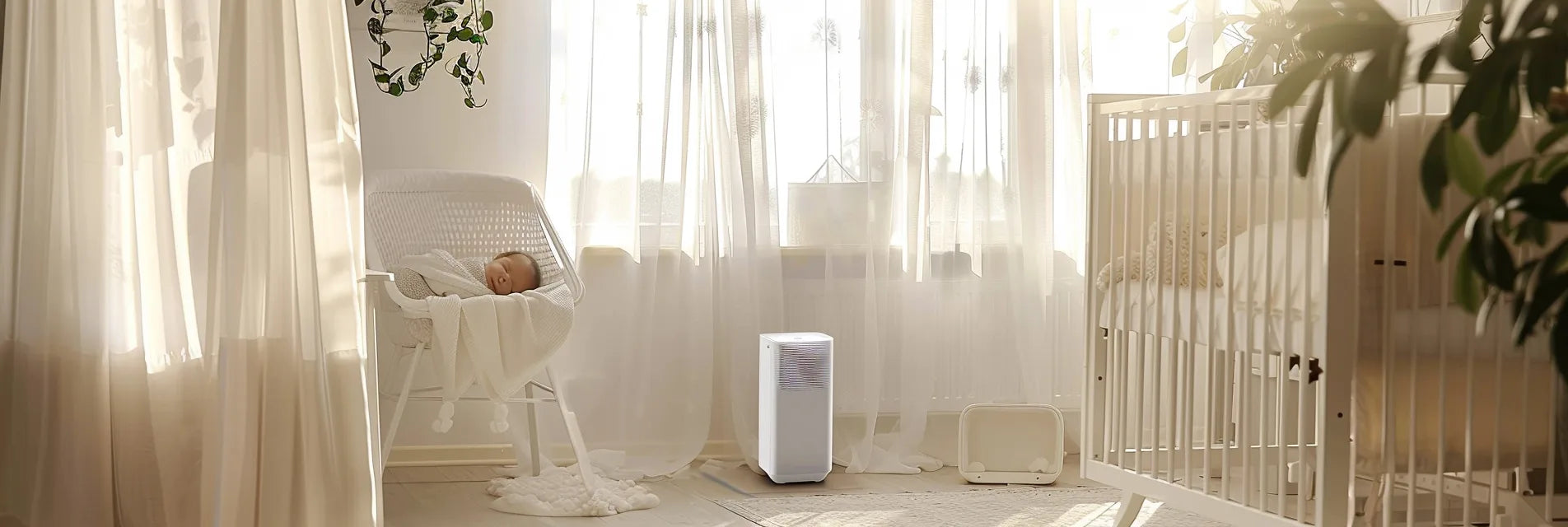
Air purifiers play an essential role in maintaining a healthy environment for babies and children. These devices help remove harmful particles from the air, such as allergens, dust, pet dander, and smoke, which can negatively affect a child's respiratory system. With air quality significantly impacting a child's health, choosing the right purifier is crucial for better sleep, improved breathing, and overall well-being.
Best
Turonic Premium Air Purifier PH950
Best Overall Air Purifier for Babies and Kids
Premium Protection for Your Little Ones
The Turonic Premium Air Purifier PH950 combines advanced 8‑stage purification with a humidifier to clean and humidify air for large rooms. It includes True HEPA 13, activated carbon, cold catalyst and UV‑C filtration, along with an ionizer and PM2.5 sensor for real‑time air quality monitoring.
Nursery-Ready Smart Operation
It quietly operates as low as ~36 dB and offers multiple fan speeds, automatic mode, smart app control, and a child safety lock — ideal for nurseries and kids' rooms with allergens, dust, smoke, and pet dander. The Turonic brand is known for its cutting-edge technology in air purification, ensuring a consistent and safe environment for babies and children.

Why Air Purifiers Are Important for Babies and Kids (Health, Sleep, Breathing)
Babies and young children are particularly vulnerable to poor air quality because their respiratory systems are still developing. Pollutants in the air, such as dust, mold, and pet dander, can trigger allergies, asthma, or other respiratory issues. By ensuring cleaner air, air purifiers help reduce the risk of health issues like frequent colds, coughing, or wheezing. For babies with sensitive lungs, air purifiers are especially important in keeping their environment safe.
Allergies and Respiratory Health: How Air Purifiers Help
Air purifiers are beneficial in alleviating allergic reactions in babies and kids by filtering out common allergens like pollen, pet dander, and dust mites. These allergens can cause sneezing, coughing, watery eyes, and difficulty breathing. In children prone to asthma, an air purifier can help reduce the frequency and severity of attacks by removing airborne irritants that can trigger symptoms. Regular use of an air purifier can create a safer space for children to play and rest, thus improving their overall health.
Removing Harmful Pollutants: What's in Your Baby's Air?
The air in your home may contain a variety of pollutants, including volatile organic compounds (VOCs) released from paints, furniture, and cleaning products. These harmful chemicals can cause respiratory irritation and discomfort for babies. Moreover, smoke from cooking, tobacco, or fireplaces can introduce harmful particles into the air, making the environment unsafe for young children. Air purifiers equipped with advanced filtration systems help to remove these pollutants, promoting cleaner, safer air for babies and kids to breathe.
Benefits for Sleep: Cleaner Air for Better Rest
Cleaner air directly influences a baby's sleep quality. Babies, who spend a significant amount of time sleeping, are more susceptible to disturbances caused by poor air quality. Air purifiers help remove airborne irritants such as dust, pollen, and pet dander, which can trigger coughing or sneezing, interrupting a baby's sleep. Cleaner air also helps babies breathe more easily during the night, leading to deeper and more restful sleep. This is particularly important for babies with allergies or respiratory issues, as improved air quality can promote a more comfortable sleeping environment.
Additionally, air purifiers can help maintain a more consistent and calm sleeping atmosphere by reducing odors or pollutants that may disrupt sleep. Parents will often find that with cleaner air, their babies are less fussy and more at ease, making bedtime a more peaceful experience for both the child and the caregiver. Overall, cleaner air contributes to better health and well-being, which can help babies grow and develop more effectively.
Choosing an Air Purifier for Sensitive Lungs: Features to Look for
When selecting an air purifier for babies and children, it's crucial to look for features that cater to sensitive lungs. First and foremost, a HEPA filter is essential for capturing tiny particles that could irritate the respiratory system. Additionally, an air purifier with a built-in air quality sensor can help monitor the room's air, adjusting the filtration speed as needed. Quiet operation is another key feature to look for, as a noisy purifier may disrupt your child's sleep. Ensure the model you choose is child-safe, with protective features like a child lock to prevent accidental use.
Air Purifiers in the Nursery vs. Playroom: Different Needs
When selecting an air purifier for a baby's nursery, it's important to prioritize quiet operation and a small, space-efficient design. Babies spend most of their time in their nursery, especially during sleep, so the air purifier should not disturb them. In this case, a smaller unit with low noise levels (under 40 dB) is ideal. A model that also features a nightlight or gentle lighting can add to the comfort of the baby's room without being intrusive.
In contrast, the playroom requires a more robust air purifier due to the increased activity, dust, and possibly pet dander. For larger rooms, a more powerful purifier with a greater CADR (Clean Air Delivery Rate) will be necessary. It should be capable of covering a larger area and handling higher airflow demands while still operating quietly. Features like portability and easy-to-clean filters are also essential in the playroom, where messes and pollutants may accumulate more frequently.
Key Features to Look for in an Air Purifier for Babies and Kids (Any Budget)
When purchasing an air purifier for your baby or child, several key features should be considered to ensure you get the best value for your investment. The most important factor is the type of filtration system it uses, especially HEPA filters that effectively trap particles down to 0.3 microns. Additionally, the purifier should be easy to use, efficient, and quiet to avoid disrupting your child's daily activities or sleep. Other features like smart sensors, automatic modes, and filters that are easy to replace add further convenience. Below is a comparison table to help you evaluate some of the top models:
|
Model |
Filter Type |
Noise Level |
Coverage Area |
Price Range |
|
Turonic Premium Air Purifier PH950 |
HEPA + UV-C + Ionizer |
36 dB |
Up to 700 sq ft |
$350 - $400 |
|
Levoit Core Mini Air Purifier |
HEPA |
25 dB |
Up to 215 sq ft |
$50 - $70 |
|
GermGuardian AC4700BDLX |
HEPA + UV-C |
40 dB |
Up to 150 sq ft |
$100 - $120 |
|
Blueair Mini Restful Air Purifier |
HEPA + Activated Carbon |
32 dB |
Up to 150 sq ft |
$120 - $150 |
|
Sereniby Medical-Grade Nursery Purifier |
HEPA |
30 dB |
Up to 300 sq ft |
$200 - $250 |
HEPA Filters: The Gold Standard for Clean Air
HEPA filters are considered the gold standard in air purification because they are capable of trapping 99.97% of airborne particles as small as 0.3 microns. This includes dust, pollen, pet dander, and even bacteria and viruses. For babies and children, having a HEPA filter ensures that they are breathing cleaner air free from the harmful particles that can irritate their lungs and exacerbate conditions like asthma and allergies. When shopping for an air purifier, look for a true HEPA filter (not just a "HEPA-type" filter) to ensure maximum efficiency and air quality.
In addition to trapping particles, HEPA filters also help reduce the spread of airborne diseases and contaminants. With babies and kids being more susceptible to infections, a HEPA filter can contribute significantly to their overall health and wellness by purifying the air in their rooms. Pairing a HEPA filter with other technologies like UV-C or activated carbon further enhances its effectiveness, providing multi-layer protection against harmful airborne particles.
Air Quality Sensors and Indicators: Smart Monitoring
Air quality sensors are becoming a standard feature in modern air purifiers, allowing parents to monitor the air in real time. These sensors detect pollutants in the air, such as dust, smoke, or VOCs, and adjust the purifier's performance accordingly. Many devices also have color-coded indicators that visually show the air quality, making it easy for parents to know when the air is not optimal for their child's health. Smart air purifiers with sensors provide peace of mind by automatically regulating the filtration process, ensuring cleaner air without the need for manual adjustments.
Noise Levels: Quiet Operation for Babies' and Kids' Rooms
For an air purifier to be suitable for a child's room, it must operate quietly. Babies and children are particularly sensitive to noise, and a loud purifier can disrupt their sleep or cause unnecessary stress. Look for models that operate below 40 dB, as these are considered quiet enough for restful sleep. Some models have a "sleep mode" that reduces the noise level even further while continuing to purify the air effectively. Choosing a quieter unit ensures that the air purifier works without disturbing the child's environment, providing cleaner air without compromising on comfort.
Coverage Area: Ensuring the Whole Room Is Cleaned
The coverage area of an air purifier determines how large a space it can effectively clean. For a baby's room or nursery, you will want a purifier that covers the full square footage of the room. A purifier with a smaller coverage area may not be able to clean the air as efficiently, leaving pollutants in corners or under furniture. Make sure to select a model that is appropriate for the size of your child's room, whether it's a small nursery or a larger playroom. Be sure to check the CADR (Clean Air Delivery Rate) rating to ensure the purifier is powerful enough for the space.
Top Air Purifiers for Babies and Kids by Budget and Performance
1. Turonic Premium Air Purifier PH950

The Turonic Premium Air Purifier PH950 combines advanced 8‑stage purification with a humidifier to clean and humidify air for large rooms. It includes True HEPA 13, activated carbon, cold catalyst and UV‑C filtration, along with ionizer and PM2.5 sensor for real‑time air quality monitoring. It quietly operates as low as ~36 dB and offers multiple fan speeds, automatic mode, smart app control, and a child safety lock — ideal for nurseries and kids' rooms with allergens, dust, smoke, and pet dander. The Turonic brand is known for its cutting-edge technology in air purification, offering premium features such as advanced sensors and automatic air quality adjustment, ensuring a consistent and safe environment for babies and children.
+ Pros:
- Powerful 8‑stage filtration with True HEPA 13 & UV‑C for deep cleaning
- Combined humidifier helps maintain comfortable moisture levels
- Smart sensors & quiet operation suitable for bedrooms
- Child safety lock prevents accidental adjustments
- Multiple fan speeds and intuitive control interface
- Cons:
- Relatively large and heavier than mini purifiers
- Higher price point compared to budget models
2. Levoit Core Mini Air Purifier

Levoit is a well-established brand in the air purifier industry, known for its compact yet effective air purifiers. The Levoit Core Mini Air Purifier is designed for smaller spaces like nurseries or bedrooms. It uses a 3-stage filtration system that includes a pre-filter, true HEPA filter, and activated carbon filter to remove dust, pollen, pet dander, and other allergens. With its quiet operation and small footprint, it's a great choice for babies and kids. Levoit's reputation for affordability combined with efficient filtration technology makes it a popular choice among parents.
+ Pros:
- Compact and lightweight — great for small nurseries and travel
- Quiet operation suitable for sleep
- Budget-friendly price point
- 3-stage filtration with true HEPA filter
- Cons:
- Limited coverage area compared to larger units
- No smart features or app connectivity
3. GermGuardian AC4700BDLX

GermGuardian is a trusted brand specializing in air purifiers that provide both filtration and additional protection. The GermGuardian AC4700BDLX features a 3-in-1 HEPA filter, UV-C light, and activated carbon filter that help to capture airborne particles, neutralize odors, and kill germs. This model is great for households with pets or high allergens. GermGuardian is known for producing reliable, budget-friendly purifiers that provide solid performance without breaking the bank.
+ Pros:
- HEPA filtration captures common allergens
- Good balance of price and performance
- UV-C light helps neutralize germs and bacteria
- Compact design suitable for children's rooms
- Cons:
- May be noisier at higher fan settings
- Smaller coverage area than premium models
4. Blueair Mini Restful Air Purifier

Blueair is renowned for its high-performance air purifiers and innovative filtration systems. The Blueair Mini Restful Air Purifier uses a combination of HEPA and activated carbon filters, providing effective removal of pollutants like dust, smoke, and volatile organic compounds (VOCs). Blueair's purifiers are often praised for their sleek designs and superior air quality performance. Their products are ideal for those looking for a premium option that combines both efficiency and aesthetics for the home or nursery.
+ Pros:
- Compact size with decent filtration
- Sleek, modern design that fits nursery aesthetics
- Dual HEPA and activated carbon filtration
- Quiet operation for restful sleep
- Cons:
- Moderate performance relative to newer HEPA models
- Limited coverage area for larger rooms
5. Sereniby Medical-Grade Nursery Purifier

The Sereniby Medical-Grade Nursery Purifier is designed specifically for nurseries, offering a medical-grade filtration system that ensures the cleanest air possible. It uses a high-efficiency HEPA filter, advanced air quality sensors, and child-safe airflow to ensure the room stays safe for infants. Sereniby is a newer but highly specialized brand focused on producing air purifiers tailored to the needs of babies, offering precise air quality monitoring and night-friendly features. This makes it a premium choice for parents looking for a safe and effective solution to improve air quality in their baby's room.
+ Pros:
- Designed specifically for babies' rooms with safety and night features
- Precision air quality sensing and alerts
- Medical-grade HEPA filtration
- Child-safe airflow design
- Cons:
- Price typically higher than basic compact purifiers
- Limited brand track record compared to established names
How to Choose the Right Air Purifier for Your Baby or Child
Consider Your Home's Air Quality: Pollutants, Allergens, and Particulates
When choosing an air purifier for your baby, it's important to assess the quality of air in your home. Common pollutants like dust, pollen, pet dander, and even household chemicals can affect your child's health. Babies and young children are particularly sensitive to these airborne irritants, which can exacerbate allergies, asthma, and respiratory issues. Look for a purifier with multiple filters, such as HEPA and activated carbon, to ensure it captures a broad range of harmful particles and pollutants.
Choose Based on Room Size
One of the most important factors when choosing an air purifier is the size of the room it will be used in. Larger rooms require a purifier with a higher Clean Air Delivery Rate (CADR) to ensure the air is properly filtered. For a nursery or small bedroom, a compact model with a smaller coverage area may be sufficient. However, for larger rooms, you'll want to opt for a purifier that can handle a larger volume of air to ensure optimal performance. Always check the recommended room size before purchasing.
Additionally, take into account the layout of the room. If the room has a lot of furniture or obstacles, airflow might be restricted. A purifier with higher airflow capacity will ensure that every corner of the room gets adequately cleaned. For rooms with open spaces, a unit with a lower CADR could work fine, but for larger rooms with complex layouts, a more powerful model may be necessary.
Look for Quiet Operation: Ensuring a Peaceful Environment
When selecting an air purifier for a baby or child's room, quiet operation is a must. Babies and children need undisturbed sleep, and loud purifiers can interfere with their rest. Look for models that operate under 40 dB, which is roughly the noise level of a soft whisper. Some purifiers even have a "sleep mode," which ensures the purifier runs quietly while still providing effective air filtration. A quieter model ensures that your child's sleep isn't disturbed, contributing to better health and mood.
Choose the Right Filter Type: HEPA, Activated Carbon, or Combo Filters
HEPA filters are the gold standard when it comes to air purification. They can trap 99.97% of particles as small as 0.3 microns, including dust, pollen, and pet dander, which makes them ideal for babies with allergies. Activated carbon filters, on the other hand, excel at eliminating odors, volatile organic compounds (VOCs), and smoke. If you have a pet or live in a smoky area, a purifier with an activated carbon filter will be beneficial in improving air quality.
For the best results, consider an air purifier with a combination of both HEPA and activated carbon filters. These models provide comprehensive air filtration, ensuring that both particulate matter and gases are removed from the air. Many high-end air purifiers also include additional filtration stages, such as UV-C or ionizers, to further enhance air cleaning. Be sure to choose a purifier that addresses both your particulate and gas-related air quality concerns.
Budget Considerations
Your budget is a key factor when selecting an air purifier. While high-end models offer superior features like smart sensors, Wi-Fi connectivity, and advanced filtration, they can come with a hefty price tag. On the other hand, budget-friendly models still offer essential air purification features like HEPA filtration and quiet operation, but they may lack advanced features such as air quality sensors or the ability to cover larger areas. When determining your budget, consider the long-term value of the product, including the cost of replacement filters and energy usage.
Filter Replacement and Long‑Term Costs
Although air purifiers may seem like a one-time investment, it's important to factor in the long-term costs associated with filter replacement. HEPA filters and activated carbon filters typically need to be replaced every 6 to 12 months, depending on usage and the environment. Some high-end models offer washable filters, which can save money in the long run. Always check the cost and availability of replacement filters before purchasing, as some brands may have more expensive or harder-to-find filters than others.
Specs Comparison: Budget vs. Mid‑Range vs. Premium Models
When selecting an air purifier, comparing the specifications of budget, mid-range, and premium models is essential to ensure you're getting the best value for your money. Budget models tend to be compact, simple, and effective for small spaces, while mid-range models offer a wider range of features, such as higher coverage areas and smart sensors. Premium models often provide advanced filtration systems, smart controls, and additional features like app connectivity and ultra-quiet operation. Below is a comparison table:
|
Model |
Price Range |
Filter Type |
Noise Level |
Coverage Area |
|
Turonic Premium Air Purifier PH950 |
$350 - $400 |
HEPA + UV-C + Ionizer |
36 dB |
Up to 700 sq ft |
|
Levoit Core Mini Air Purifier |
$50 - $70 |
HEPA |
25 dB |
Up to 215 sq ft |
|
GermGuardian AC4700BDLX |
$100 - $120 |
HEPA + UV-C |
40 dB |
Up to 150 sq ft |
|
Blueair Mini Restful Air Purifier |
$120 - $150 |
HEPA + Activated Carbon |
32 dB |
Up to 150 sq ft |
|
Sereniby Medical-Grade Nursery Purifier |
$200 - $250 |
HEPA |
30 dB |
Up to 300 sq ft |
Do Babies and Kids Need More Than One Air Purifier?

When One Air Purifier Is Enough for a Nursery
In most cases, one air purifier is sufficient for a nursery, especially if the room is small or has minimal exposure to pollutants. A compact, quiet model with HEPA filtration will help remove allergens, dust, and other irritants, providing cleaner air for your baby. If the room is properly sealed and doesn't have excessive pet dander or smoke, a single air purifier will keep the environment clean and healthy. Be sure to choose a model with a coverage area appropriate for the room size.
For smaller nurseries, the Levoit Core Mini Air Purifier is an excellent option. Its compact size and quiet operation make it ideal for rooms where space is limited. You can also look for models with air quality sensors, so the purifier adjusts its speed based on the level of pollution, ensuring your baby always breathes clean air.
When a Second Air Purifier Makes Sense for Larger Spaces
If you have a larger nursery or a playroom that is connected to other living spaces, a second air purifier may be beneficial. Larger rooms require purifiers with higher CADR ratings to ensure the air is fully cleaned. You may also need a second unit if the room has multiple sources of pollutants, such as pets, smoke, or a busy play area. Placing an air purifier in each room will provide better coverage and ensure consistent air quality.
Multi‑Room Solutions
If you're looking to purify the air throughout the entire house, a multi-room air purifier solution may be worth considering. Some air purifiers can be moved from room to room depending on where they are most needed, while others have a large enough coverage area to handle multiple rooms simultaneously. For example, a larger model like the Turonic Premium Air Purifier PH950 can purify air across large spaces, ensuring a healthier home environment for your child.
Daily Use Tips for Better Air Quality and Safety
To ensure your child always has clean air, it's important to follow some basic daily usage tips. Keep the air purifier running consistently to remove pollutants as they accumulate, and make sure to clean the filters regularly. Avoid placing the air purifier in corners or behind furniture where airflow could be obstructed. Also, make sure the purifier's settings are adjusted to match the room's needs, ensuring optimal air quality at all times.
Proper Placement
Placement is key when it comes to air purifiers. The unit should be positioned away from walls or corners to ensure the best airflow. Ideally, place the air purifier at least a few feet away from furniture or curtains. In a nursery, placing the purifier near the crib, but not directly next to it, ensures that the air circulates effectively throughout the room. For larger rooms, place the purifier near the center of the room to maximize its cleaning capacity.
Avoid placing the air purifier near open windows or vents, as outdoor air may introduce more pollutants. For the most effective results, ensure that the air purifier is placed where it can filter the air without obstruction and maintain continuous airflow throughout the space.
How Often to Run It
Air purifiers should run continuously for optimal performance. During the day, it's recommended to keep the air purifier on, especially in rooms where your child spends a lot of time. At night, you can use the purifier in sleep mode, ensuring it operates quietly while still filtering the air. Running the purifier continuously also helps maintain consistent air quality, especially in rooms prone to dust or allergens.
Regular Cleaning and Filter Replacement
Maintaining the air purifier is essential to ensure it operates efficiently. Regularly cleaning the unit and replacing the filters are key tasks to keep the air purifier working effectively.
- Clean the pre-filter every 1–2 weeks
- Replace the HEPA filter every 6–12 months
- Clean the air purifier's vents and fans regularly
- Replace the activated carbon filter every 6 months
Safety Features: Child Locks, Filters, Covers
When using air purifiers in a child's room, safety features should be a priority. Look for units with child safety locks to prevent accidental adjustments or tampering. Many purifiers also come with filter covers that prevent children from coming into direct contact with the filter. Ensure the unit has a stable base to prevent it from being knocked over or moved easily.
Some air purifiers also feature a safety shut-off function when the filter is clogged or if the unit is not working properly, ensuring that your baby's room remains safe and healthy. Always choose a model with these safety features to protect both your child and the air purifier itself.
Common Issues and Safety Notes for Babies and Kids

Exposure to UV‑C Light: Is It Safe for Babies?
UV-C light is effective for killing bacteria, viruses, and mold spores, but it can be harmful if used incorrectly. Some air purifiers feature UV-C lights, and while they are generally safe when used as part of the filtration system, it's essential to ensure that the UV light is contained within the purifier and doesn't expose your child to direct radiation. Always check that the model you choose has built-in safety features to prevent accidental exposure to UV-C light.
If you're concerned about UV-C light exposure, you can opt for an air purifier without UV-C or one that uses an alternative method, such as ionization or activated carbon, to disinfect the air. While UV-C light is effective, it's not necessary for all air purification needs, especially when HEPA filters are already capturing the majority of airborne particles.
Avoiding Overuse of Ionizers
Ionizers are a feature in some air purifiers that release negative ions into the air, which attach to positively charged particles like dust and allergens, causing them to fall out of the air. While ionizers can be effective at reducing airborne particles, they can also produce ozone, which may be harmful, especially for young children or babies. When using an air purifier with an ionizer, be sure to check that it meets safety standards for ozone emissions and avoid overusing it in enclosed spaces.
When Air Purifiers Aren't Enough
While air purifiers are great for improving indoor air quality, they are not a cure-all. If your child suffers from severe allergies or asthma, an air purifier may not be enough to eliminate triggers. In these cases, you should also take additional steps like using allergen-resistant bedding, regularly cleaning your home, and consulting with a doctor for further guidance on managing your child's symptoms.
Air Purifiers and Humidity Balance
Maintaining the right humidity level in your child's room is just as important as air quality. While air purifiers remove harmful particles, they don't add moisture to the air, which can lead to dryness. Dry air can cause irritation in the respiratory system, especially for babies and children with sensitive airways. Consider pairing an air purifier with a humidifier to maintain a balanced environment in your child's room.
Too much humidity, however, can cause mold and dust mites to thrive. It's important to monitor the humidity levels and ensure they remain between 30% and 50% to provide the most comfortable and healthy environment for your baby. Some air purifiers also feature built-in humidifiers, which can be particularly helpful for maintaining the right balance of moisture in the air.
Contraindications and Red Flags
Before using an air purifier, always read the manufacturer's instructions and make sure it's suitable for your child's age and health. Some models may be unsuitable for babies with specific conditions, such as severe asthma, or for households with excessive pollutants. If in doubt, consult with a healthcare professional to ensure that an air purifier is the right choice for your child's needs.
Conclusion
Choosing the right air purifier for your baby or child can greatly improve their health and quality of life by ensuring they breathe cleaner air. It's essential to consider factors like room size, filter type, and safety features, while also keeping long-term maintenance costs in mind. With the right choice, you can create a healthier environment for your little one to grow and thrive.
When choosing an air purifier, always opt for a reputable brand with proven performance and reliability. By following the tips and guidelines provided, you can confidently select the perfect air purifier that meets your needs and enhances your child's well-being.
FAQ
What is the best air purifier for a nursery?
The best air purifier for a nursery is one that operates quietly, covers the room size effectively, and uses a HEPA filter to capture dust, allergens, and pet dander. The Turonic Premium Air Purifier PH950 is an excellent choice for larger nurseries, while the Levoit Core Mini Air Purifier is ideal for smaller rooms.
How often should I change the filter in an air purifier?
Filter replacement depends on usage and the type of filter. Most HEPA filters should be replaced every 6 to 12 months, while activated carbon filters may need to be replaced more frequently. Always refer to the manufacturer's recommendations for replacement intervals.
Are UV-C lights safe for babies?
UV-C lights in air purifiers can be effective at killing germs, but they can be harmful if exposed directly to your child. Look for models with safety features that ensure the UV light is contained and cannot harm your baby.
Do air purifiers help with allergies?
Yes, air purifiers with HEPA filters can help reduce allergens in the air, such as pollen, dust, and pet dander. This can be particularly beneficial for children with allergies or asthma.
Can I use an air purifier in multiple rooms?
Yes, you can use an air purifier in multiple rooms, either by moving it between rooms as needed or by choosing a larger model that covers multiple spaces. Some models are designed specifically for larger areas or multi-room use.
Share:
Massage Guns for Athletes and Runners: Top Picks and Buying Guide
How Many Air Purifiers Do I Need to Effectively Clean the Air in My Home?